
22nd Day of the Tenth Lunar Month on Con Dao: Prince Cải Remembrance at Miếu Cậu
On the 22nd day of the tenth lunar month each year, the people of Con Dao commemorate Prince Cải, also known as Prince Hội An, at Miếu Cậu in the Cỏ Ống area. This local tradition is closely linked to a folk legend about the bond between mother and child, filial devotion and cultural values passed down through generations.
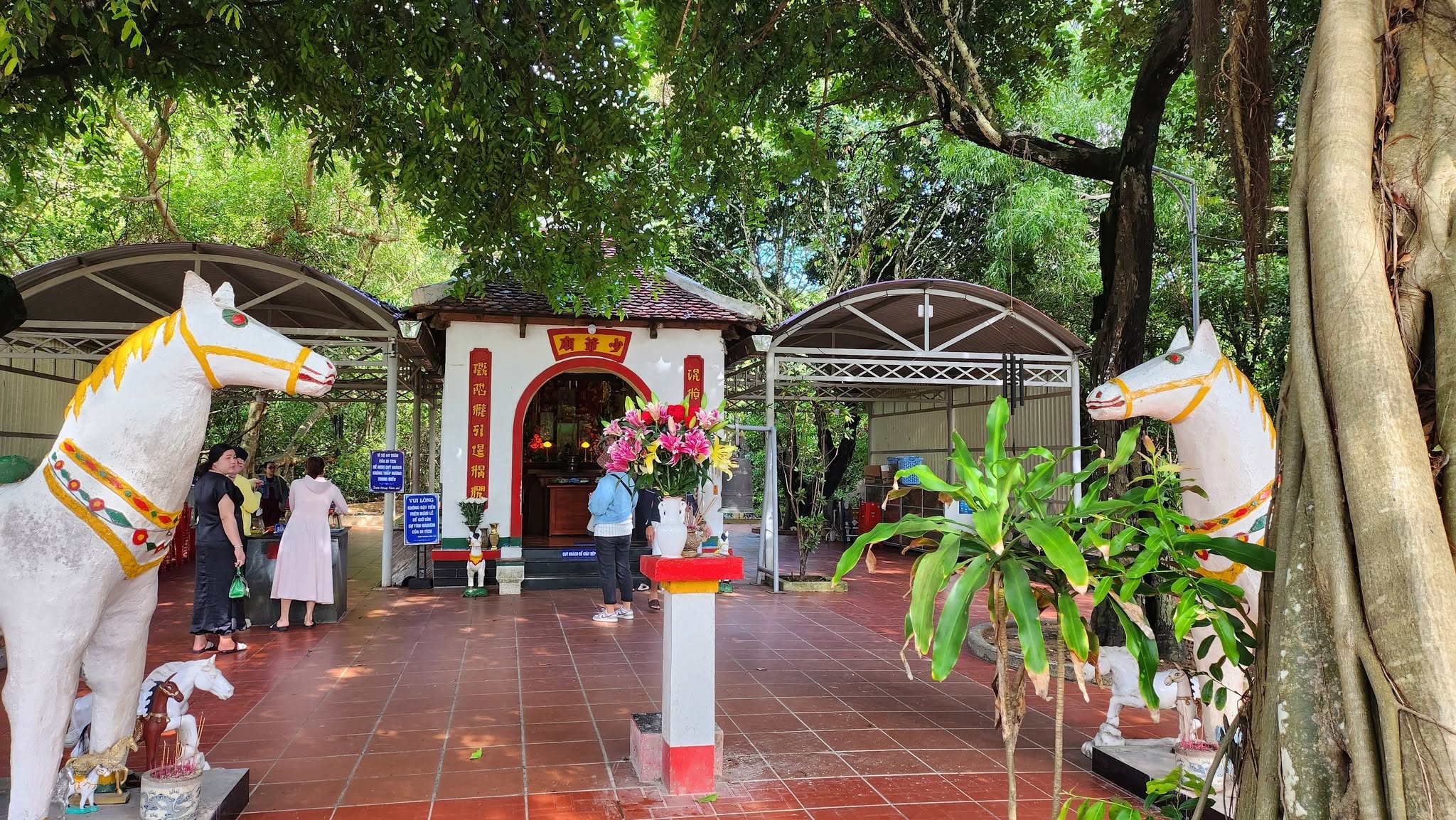
Among the trees near Con Dao Airport and Đầm Trầu Beach stands a modest shrine known as Miếu Cậu, also called Miếu Hoàng tử Cải or Thiếu Gia Miếu. Although it is not a large building, it has long been an important place in the island community’s spiritual life.
Each year, on the 22nd day of the tenth lunar month, residents gather to remember the child honoured at the shrine. Behind the ceremony is a moving oral tradition about separation, compassion and sympathy for a young life said to have ended tragically.
Who is Prince Cải in Con Dao’s folk traditions?
According to the story passed down on Con Dao, Prince Cải, also called Prince Hội An, was the son of Bà Phi Yến and Nguyễn Ánh, who later became Emperor Gia Long.
The tale is generally set in the late eighteenth century, when Nguyễn Ánh repeatedly sought refuge during his conflicts with the Tây Sơn forces. Historical accounts indicate that Nguyễn Ánh travelled to Côn Lôn during his flight, but the detailed stories about Bà Phi Yến and Prince Cải belong to local folklore and have not been established as verified historical events.
Through these narratives, An Sơn Miếu, dedicated to Bà Phi Yến, and Miếu Cậu became closely connected places of worship within Con Dao’s cultural and spiritual life.
The legend of Prince Cải and a mother’s grief
Local oral tradition tells that, while taking refuge on Con Dao, Nguyễn Ánh considered asking a foreign power for help against the Tây Sơn. Bà Phi Yến reportedly opposed this plan because of the potential consequences of relying on foreign intervention.
According to the legend, Nguyễn Ánh grew angry, suspected her loyalty and ordered her confinement in a rocky cave on a small island later known as Hòn Bà.
When the boats prepared to leave, Prince Cải could not find his mother and cried for her to accompany him. In a fit of rage, the story says, Nguyễn Ánh threw the child into the sea.
The child’s body was said to have washed ashore in the Cỏ Ống area. Moved by his fate, island residents buried him and established a shrine, later known as Miếu Cậu or Thiếu Gia Miếu. The story of Bà Phi Yến continues in different versions and is associated with her place of worship at An Sơn Miếu.
These tragic details are part of folk legend, not events proven by historical records. The story nevertheless carries cultural meaning through its themes of maternal love, filial devotion and collective compassion towards a child believed to have suffered a terrible fate.
Miếu Cậu: A place of worship in Cỏ Ống
Miếu Cậu is located in Cỏ Ống, near Con Dao Airport and Đầm Trầu Beach. Set among trees, the modest shrine offers a peaceful place for reflection.
Features associated with local beliefs, including representations of a white horse, can be found in the worship area. Residents and visitors come to offer incense, express respect and pray for health, peace and harmony in family life.
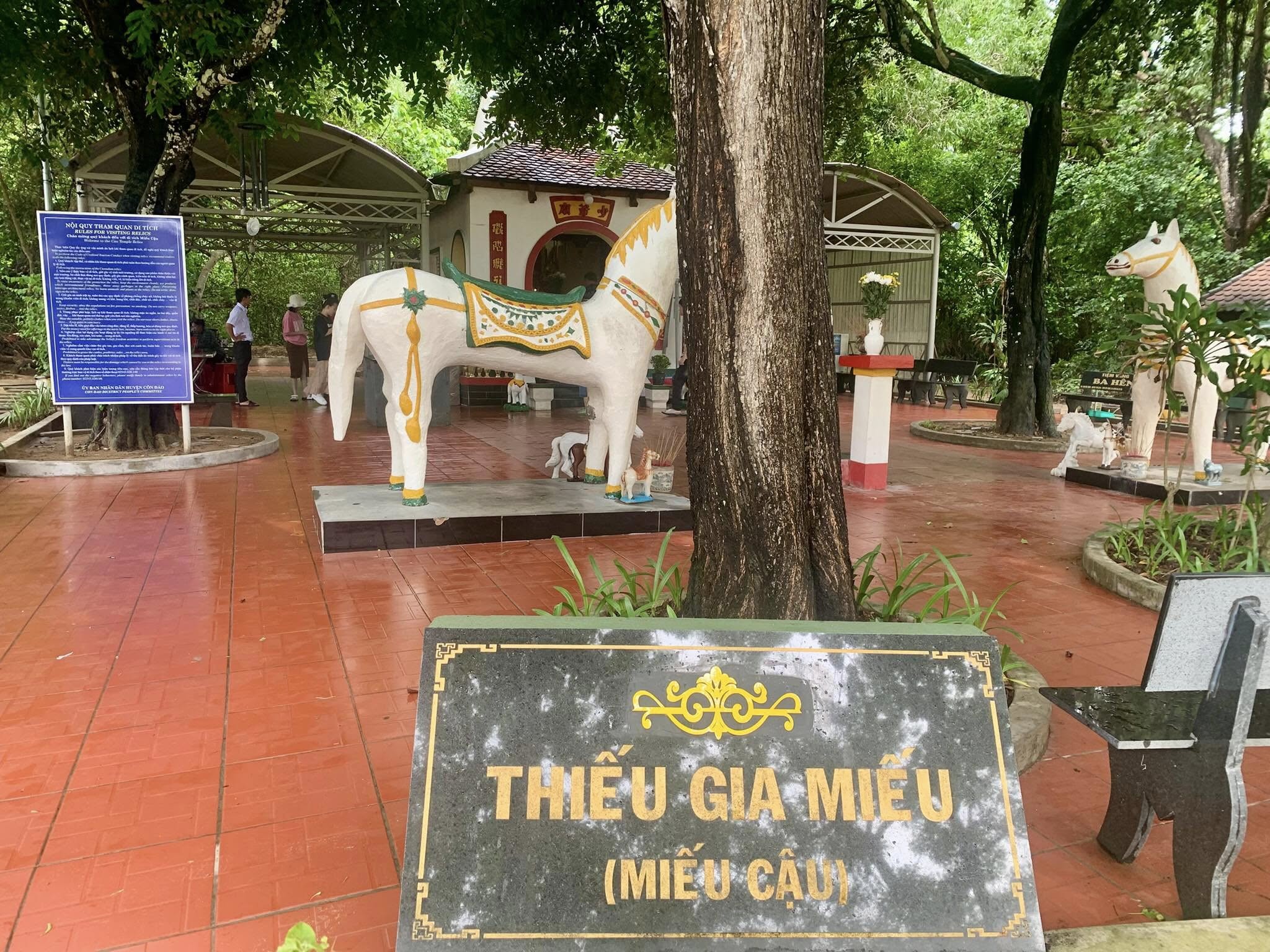
For island residents, the shrine is more than a stop on a sightseeing itinerary. It is a place where community memory, worship customs and spiritual values have been preserved across generations. See the site’s Miếu Cậu guide for more information.
What is special about the remembrance on the 22nd day of the tenth lunar month?
According to local custom, Prince Cải is commemorated at Miếu Cậu on the 22nd day of the tenth lunar month each year. Residents prepare offerings, light incense and perform traditional rituals of remembrance.
The atmosphere is solemn yet familiar, reflecting the community’s continuing participation in this cultural tradition. Depending on local customs and the shrine’s guidance, offerings may include flowers, fruit, sticky rice, sweet dishes, cakes and other suitable items.
Some visitors also bring small gifts reflecting the image of a child in the legend. However, the exact offerings, rituals and ceremony times should not be assumed to be the same every year without an official programme.
The meaning of the remembrance lies not in the monetary value of the offerings but in sincere respect and the preservation of a cultural practice important to the people of Con Dao.
The connection with Bà Phi Yến’s remembrance
In Con Dao’s folk traditions, Miếu Cậu and An Sơn Miếu are closely linked. Their principal remembrance dates, however, honour different figures:
- 18th day of the tenth lunar month: Bà Phi Yến’s remembrance at An Sơn Miếu.
- 22nd day of the tenth lunar month: Prince Cải’s remembrance at Miếu Cậu in Cỏ Ống.
An important rite associated with Bà Phi Yến’s ceremony is the procession of Prince Hội An’s memorial tablet from Miếu Cậu to An Sơn Miếu. The procession symbolically reunites mother and child within the community’s spiritual traditions.
After Bà Phi Yến’s ceremony, the tablet is returned to Miếu Cậu. The connection between the two shrines reflects family affection, filial devotion and the community’s role in safeguarding this heritage.
Read more in the site’s An Sơn Miếu and Bà Phi Yến guide.
Prince Cải remembrance schedule for 2026
In 2026, the 22nd day of the tenth lunar month falls on Monday, 30 November 2026. According to the programme announced for the 241st Traditional Bà Phi Yến Commemoration Festival, the remembrance of Prince Hội An was scheduled as follows:
- Lunar date: 22 October, Year of Bính Ngọ.
- Gregorian date: Monday, 30 November 2026.
- Time: 4:00 p.m. to 7:00 p.m.
- Venue: Miếu Cậu heritage site, Cỏ Ống, Con Dao.
The ceremony follows the traditional Bà Phi Yến festival, scheduled for 24–26 November 2026 at An Sơn Miếu. The announced programme includes a procession bringing Prince Hội An’s memorial tablet from Miếu Cậu to An Sơn Miếu on the afternoon of 25 November, followed by its return on the afternoon of 26 November.
Please note: These are the announced arrangements for 2026 only. They are not a permanent timetable. Before attending, check the latest notices from the organisers and the shrine’s management in case of changes.
The Prince Cải legend from historical and cultural perspectives
It is important to distinguish between historical records and oral tradition when exploring Miếu Cậu. Nguyễn dynasty records mention Nguyễn Ánh visiting Côn Lôn while seeking refuge. However, the central details involving Bà Phi Yến, Prince Cải and the alleged death of the child at sea have not been established by sufficient historical evidence.
Guides and writers should therefore use expressions such as “according to local legend” or “as the story is told”, rather than presenting the narrative as indisputable history.
This distinction does not diminish the shrine’s cultural value. Folklore can preserve a community’s memories, emotions and ethical ideals, even when it is not a factual chronicle in the academic sense.
The continuing ceremonies, care of the shrine and transmission of the story to younger generations illustrate the lasting importance of folk heritage in contemporary Con Dao.
Tips for visiting Miếu Cậu around the remembrance day
Visitors interested in traditional beliefs can visit Miếu Cậu to offer incense, enjoy the peaceful surroundings and learn about the stories of Bà Phi Yến and Prince Cải. The shrine remains a place of worship, and its customs and caretakers should be treated with respect.
- Dress modestly and keep noise to a minimum, particularly during rituals.
- Prepare simple offerings appropriate to local custom; expensive gifts are unnecessary.
- Follow fire-safety rules and do not burn paper offerings where prohibited.
- Avoid littering, crowding and unnecessary single-use plastics.
- Check the actual ceremony schedule, especially when visiting as part of a large group.
Combining Miếu Cậu with Đầm Trầu Beach
Because Miếu Cậu is in Cỏ Ống, it can be paired with a visit to nearby Đầm Trầu Beach if weather and access conditions permit.
Another option is a cultural route taking in Miếu Cậu, An Sơn Miếu and Núi Một Pagoda, giving visitors a broader introduction to the island’s spiritual traditions.
Travelling to Con Dao by high-speed ferry? Check the latest ferry schedules and reference ticket prices to plan the journey. Rough weather may affect sailings, so confirm your departure before travelling to the port.
Frequently asked questions about Prince Cải’s remembrance
When is Prince Cải commemorated?
According to local tradition, the remembrance takes place on the 22nd day of the tenth lunar month at Miếu Cậu in Cỏ Ống. The corresponding Gregorian date changes from year to year.
Are Prince Cải and Prince Hội An the same figure?
In Con Dao’s folk narratives, Prince Cải is a familiar name for Prince Hội An, the figure honoured at Miếu Cậu.
Where is Miếu Cậu?
The shrine is in the Cỏ Ống area, near Con Dao Airport and Đầm Trầu Beach on Côn Sơn Island.
Are Prince Cải’s remembrance and Bà Phi Yến’s commemoration on the same day?
No. Bà Phi Yến’s main remembrance date is the 18th day of the tenth lunar month, while Prince Cải is commemorated on the 22nd. The observances are connected through the procession and return of his memorial tablet.
Is the Prince Cải story established historical fact?
No. The narrative belongs to the island’s folk traditions. Its main episodes have not been sufficiently verified as actual historical events.
Preserving the tradition of Miếu Cậu on Con Dao
The stories of Prince Cải and Bà Phi Yến have been passed down by Con Dao residents for generations. Miếu Cậu is not only a shrine to a legendary figure; it is also a living cultural space where community traditions and shared values are maintained.
The remembrance on the 22nd day of the tenth lunar month offers a chance to pay respects and share stories with younger generations about maternal love, filial devotion and compassion.
As Con Dao develops and welcomes more visitors, caring for Miếu Cậu and preserving its traditional practices can help maintain the island’s distinctive cultural identity.
Đọc bài viết bằng tiếng Việt · Discover other dates and traditions through Con Dao’s events calendar.