
18 October on Con Dao: Remembering Trần Văn Bảy (Bảy Xệ)
Every 18 October, Con Dao remembers Trần Văn Bảy, widely known as Bảy Xệ, a Hero of the People’s Armed Forces and a revolutionary organiser whose work shaped movements in the Mekong Delta before his death in Con Dao Prison. He served in important positions in Rạch Giá, Cần Thơ and Vĩnh Long during preparations for the 1940 Southern Uprising. The Con Dao heritage authorities use 18 October as his commemorative date, although historical sources disagree on the exact day and year of his death.
From rural poverty to revolutionary activism
According to Historical Figures of Vĩnh Long Province (Nhân vật lịch sử tỉnh Vĩnh Long), Trần Văn Bảy, nicknamed Bảy Xệ, was born in 1911 into a poor farming family in the Tam Bình area of Vĩnh Long. After the family lost its farmland, they moved to Mỹ Quới commune, Thạnh Trị district, in the historical province of Sóc Trăng. Other local records describe him as having been born in Mỹ Quới. Although the accounts differ about his birthplace, Mỹ Quới is closely associated with his youth and early political activities.
Around 1927 and 1928, while still a teenager, he became acquainted with progressive newspapers, literature and patriotic ideas. He saw farmers struggling with poverty, land loss and heavy taxation. These experiences helped draw him toward community organising and revolutionary activity.
Building Party networks and mobilising farmers
By the late 1920s, Trần Văn Bảy was helping organise young people in Mỹ Quới. When the local Communist Party organisation took shape around 1930, he became one of its key cadres and later served as Secretary of the Mỹ Quới Party cell.
He subsequently worked in Phước Long, supporting the development of Party organisations and helping mobilise farmers to protest exploitative conditions. Local historical records also associate him with leadership assignments in Rạch Giá, Cần Thơ and Vĩnh Long.
During the period of the Indochinese Democratic Front, he participated in political communication and the public discussion of farmers’ hardships. The Vĩnh Long biographical account mentions his contribution to legal newspapers associated with the movement, drawing attention to economic distress and encouraging workers and farmers to seek better conditions.
Preparing for the 1940 Southern Uprising
From late 1939 into 1940, revolutionary networks in southern Vietnam faced increasingly intense repression by the French colonial authorities. Party cells were raided and activists were arrested. During this period, Trần Văn Bảy was assigned to help lead the movement in Vĩnh Long, strengthen organisations and prepare forces for an uprising.
Provincial Party history records state that Bảy Xệ became Secretary of the Vĩnh Long Provincial Party Committee in early 1940. He worked with other organisers to maintain underground cells, build popular support and prepare for the planned uprising under the direction of the regional Party leadership.
Secret meetings and preparations took place at several locations. Some historical accounts mention a July 1940 meeting in the Cầu Lầu area that was discovered by colonial police, resulting in the arrest of important cadres. Other sources place the raid and Trần Văn Bảy’s arrest at the Cầu Lầu network in September 1940. The exact sequence still calls for comparison with original archival material.
His arrest was a serious setback for local revolutionary preparations at a time when the Southern Uprising was approaching.
From mainland prisons to Con Dao
After his arrest, Trần Văn Bảy was held in prisons in Vĩnh Long, Cần Thơ and Saigon. Historical accounts describe prolonged interrogation, harsh confinement and pressure to reveal underground organisations. He nevertheless remained committed to his cause and refused to abandon his comrades.
The French colonial authorities sentenced him to life imprisonment and exile and deported him to Con Dao. Like many political prisoners of the era, he faced a system designed both to punish and to isolate opponents of colonial rule.
Fellow prisoners remembered him as a principled and caring organiser. He helped maintain solidarity among prisoners, encouraged people weakened by illness or malnutrition and joined collective resistance to abusive conditions. His experience forms part of the broader story of political imprisonment on Con Dao.
18 October and the differing death records
The Con Dao National Heritage Conservation Centre uses 18 October 1942 as the date of Trần Văn Bảy’s death in its remembrance activities. However, 25 November 1941 appears in other biographical materials, while a preserved prisoner list includes 11 January 1942 based on information supplied by his family.
For this article, 18 October is the commemorative date currently used on Con Dao, not a definitive resolution of the conflicting archival records. Despite these differences, the sources agree that he died during his imprisonment on the island.
His life is remembered for years of underground organising in the Mekong Delta, contributions to preparations for the 1940 Southern Uprising and his resolve after imprisonment.
Remembrance at Hàng Dương Cemetery
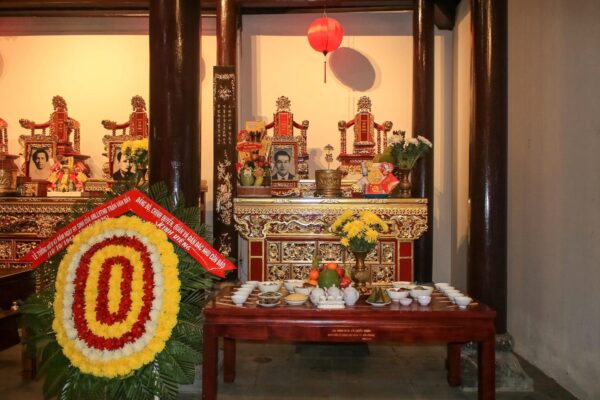
Every 18 October is an occasion to remember Trần Văn Bảy (Bảy Xệ). Memorial activities have taken place in Section D of Hàng Dương Cemetery and at Con Dao Memorial Temple. Incense offerings and moments of silence honour a man who dedicated his life to the revolutionary movement and died far from home.
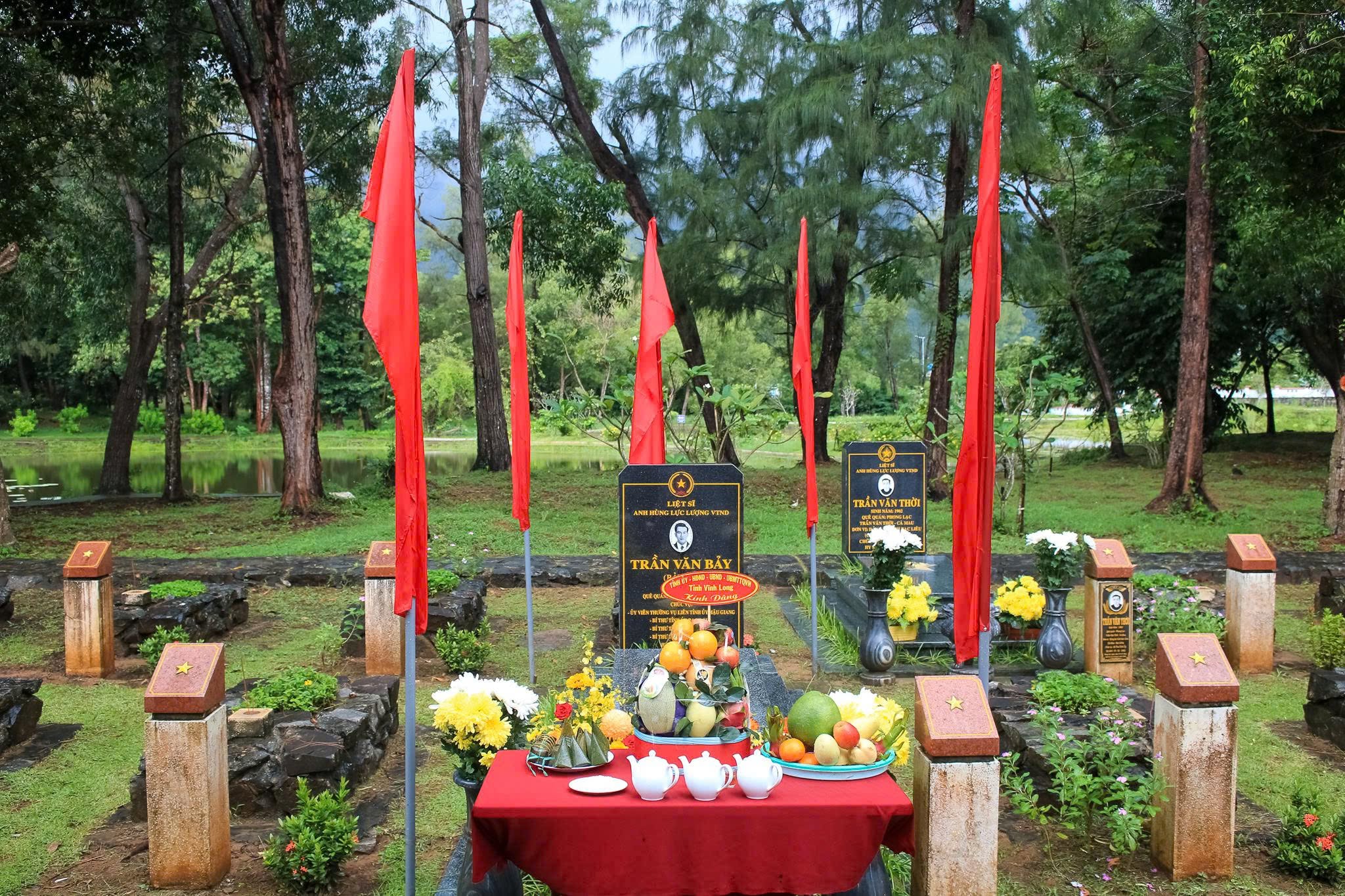
Visitors seeking to learn more about him may wish to search records under both Trần Văn Bảy and Bảy Xệ, as well as the places Phước Long, Cần Thơ and Vĩnh Long. Heritage staff can help guide visits to Con Dao’s historic prison sites and Hàng Dương Cemetery. Any official remembrance programme is announced for the year in which it is held.
Posthumous recognition
On 1 December 2014, Trần Văn Bảy was posthumously awarded the title Hero of the People’s Armed Forces. The honour acknowledged his contribution and sacrifice in Vietnam’s struggle for independence.
His name remains part of the revolutionary history of the Mekong Delta. His biography also highlights the often less visible work of organisers who built local networks, connected communities and sustained underground activity during years of repression.
Remembering a steadfast organiser from southern Vietnam
Con Dao today preserves not only prison buildings but also the stories of the individuals who lived and died there. Trần Văn Bảy is one of those people. From Mỹ Quới and the revolutionary networks of Vĩnh Long and Cần Thơ to his imprisonment on Con Dao, his life was linked to major developments in the South before 1945.
Remembering him on 18 October offers an opportunity to reflect on solidarity, conviction and sacrifice. It also reminds us why historical accounts should carefully distinguish verified facts from details that remain disputed in the archives.
For related reading in English, see 5 February on Con Dao: Remembering Trần Văn Thời, another account of a revolutionary leader whose life ended in the island’s prison system.
Sources: Historical Figures of Vĩnh Long Province (Nhân vật lịch sử tỉnh Vĩnh Long), Provincial Party Committee of Vĩnh Long, National Political Publishing House, pp. 29–30; Con Dao National Heritage Conservation Centre, 83rd-anniversary remembrance report (2025) and its preserved prisoner list; Báo Vĩnh Long, historical reporting; provincial Party-history materials.
Archival note: Sources differ on Trần Văn Bảy’s birthplace, birth year and date of death. This article follows 1911 in several biographical sources, uses 18 October as the local commemorative date and records alternative death dates for transparency. The Gregorian date of 18 October should not be confused with Bà Phi Yến’s observance on the eighteenth day of the tenth lunar month.