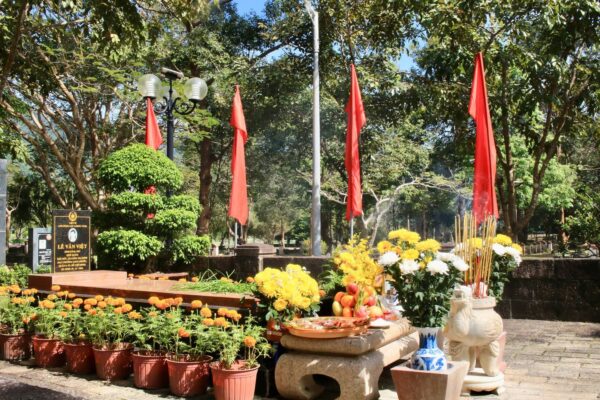


30 November on Con Dao: Remembering Lê Văn Việt (1937–1966)
Every 30 November, Con Dao commemorates Lê Văn Việt (1937–1966), a posthumous Hero of the People’s Armed Forces and a member of the Saigon–Gia Định urban resistance who died in the island’s prison system. He was also known by the name Tư Việt and as Nguyễn Văn Hai after his arrest. From underground operations in Saigon to a daring escape attempt at Phú Hải Prison, his life forms part of the history of political resistance and imprisonment on Con Dao.
Lê Văn Việt: a resistance fighter from Long Phước
Lê Văn Việt was born in 1937 in Long Phước commune, in the historic Thủ Đức area of Saigon, now within Ho Chi Minh City. He also lived in Long Trường, another locality associated with the former Thủ Đức district. Revolutionary records often refer to him as Tư Việt, while prison accounts use Nguyễn Văn Hai. These names identify the same individual.
According to his biographical dossier, he became involved in revolutionary activities in January 1959, joined the armed forces on 3 February 1960 and became a Party member on 1 October 1962. He subsequently served in reconnaissance and special-operations roles around Saigon and Gia Định.
From late 1962 he underwent specialised reconnaissance and commando training, before participating in armed operations in Củ Chi, Hóc Môn and nearby districts. These areas were sites of intense military and political conflict during the early 1960s.
The US Embassy attack on 30 March 1965
A major event in Lê Văn Việt’s life was the attack on the US Embassy building in Saigon on 30 March 1965, near Hàm Nghi Street. Accounts held by the Con Dao heritage centre identify him as a participant and state that he was seriously wounded during the fighting before his capture.
The explosion severely damaged the building and caused casualties among both American and Vietnamese people, including civilians. US diplomatic records state that Deputy Ambassador U. Alexis Johnson was injured by flying glass. The incident is documented in both Vietnamese and international historical sources.
After his capture, Lê Văn Việt was interrogated and sentenced to death by a military court of the Saigon government. The sentence was not immediately carried out. He remained in custody and was later transferred to the prison system on Con Dao.
Imprisonment at Phú Hải Prison
On Con Dao, he was held with other prisoners under death sentences in a heavily guarded part of the prison complex. Despite lingering injuries from the embassy attack and the harsh conditions of confinement, he remained determined to escape and return to the mainland.
He met two other prisoners: Lê Hồng Tư, a student involved in resistance activities, and Phạm Văn Dẫu, a special-operations fighter. The three planned to leave the prison, hide on the island and wait for an opportunity to cross the sea.
The daring prison escape of 12 October 1966
On the night of 12 October 1966, Lê Văn Việt, Lê Hồng Tư and Phạm Văn Dẫu escaped from a high-security cell in the Phú Hải prison complex. The Con Dao heritage centre describes the attempt as exceptional because it began in the section used to hold prisoners sentenced to death, where surveillance was particularly strict.
After leaving the prison grounds, they sought shelter and hoped to construct a raft or find another way to reach the mainland. Con Dao’s rugged terrain, the absence of a support network and intensive searches by the guards made further escape very difficult.
Memoir accounts state that Lê Hồng Tư was recaptured first, while Lê Văn Việt and Phạm Văn Dẫu remained hidden for longer before they too were found and returned to custody. The escape attempt prompted the prison authorities to reinforce security measures.
Although the escape failed, it became a remarkable chapter in the history of resistance by prisoners on Con Dao. Even under a death sentence and close surveillance, these men continued searching for a route to freedom.
30 November 1966: Lê Văn Việt’s death in prison
After he was recaptured, Lê Văn Việt reportedly endured severe beatings and mistreatment. His abdominal injuries from the 1965 operation worsened, and his health deteriorated under the harsh conditions of imprisonment.
Lê Văn Việt died in Con Dao Prison on 30 November 1966, aged 29. His life is remembered through two major events: the March 1965 embassy attack and the October 1966 prison escape. His death illustrates the terrible personal cost borne by many people during the war.
His grave in Section C of Hàng Dương Cemetery
Lê Văn Việt’s grave is located in Section C of Hàng Dương Cemetery on Con Dao, where generations of Vietnamese patriots and political prisoners who died on the island are remembered.
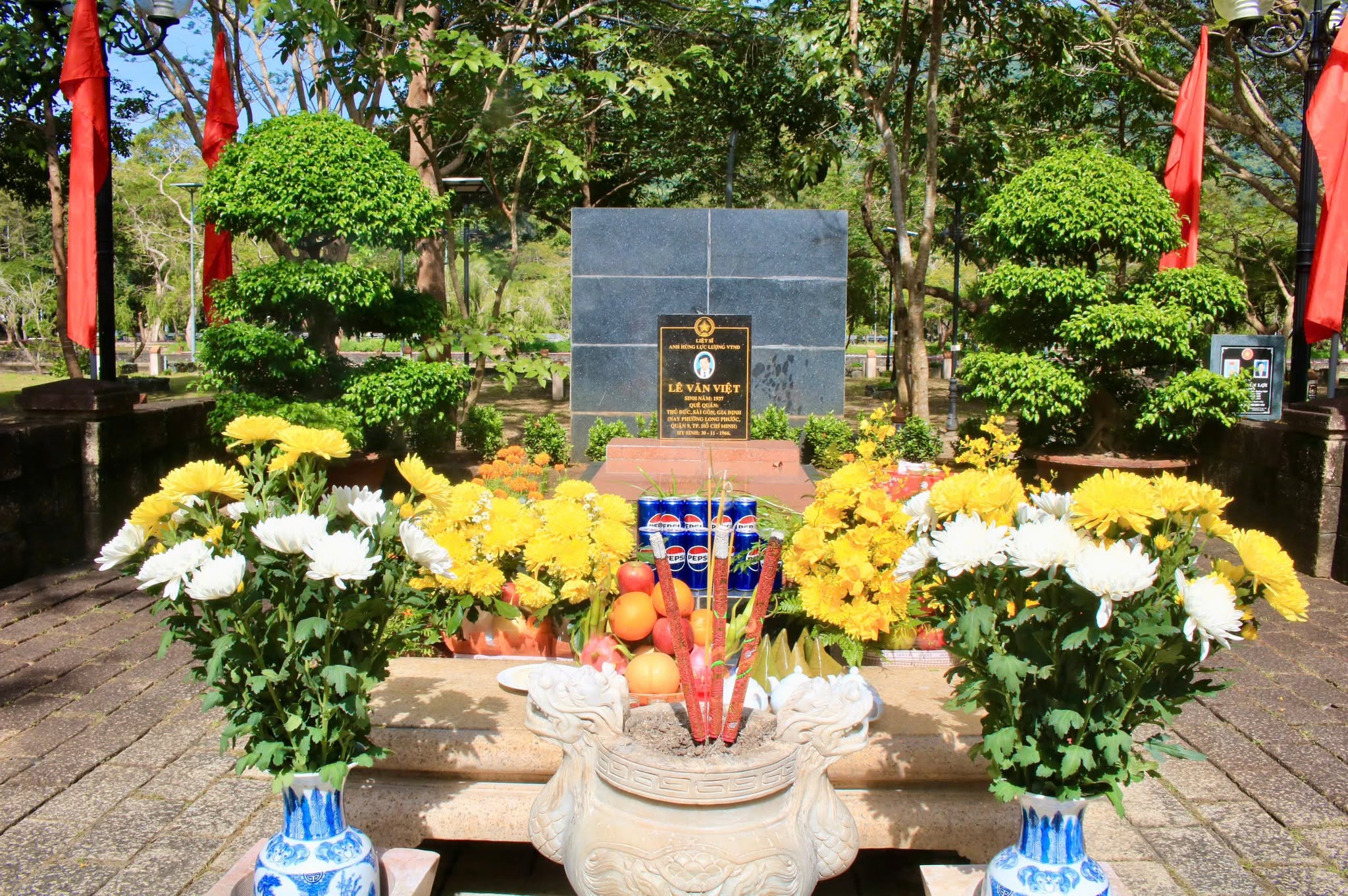
Every 30 November is an occasion to remember Lê Văn Việt, a resistance fighter from Saigon–Gia Định who died while imprisoned far from home. Memorial visits, incense offerings and learning about his story help preserve historical memory. Any formal ceremony is announced separately for the relevant year.
Posthumously recognised as a national hero
On 20 December 1994, Lê Văn Việt was posthumously awarded the title Hero of the People’s Armed Forces. This honour recognised his contribution and sacrifice during the struggle for national independence.
His name remains part of local historical memory in the Thủ Đức area of Ho Chi Minh City. On Con Dao, he is particularly remembered for the daring escape planned and carried out by three prisoners under death sentences.
Remembering the people behind Con Dao’s prison history
Con Dao’s former prisons are more than walls, cells and barbed wire. Each surviving site is connected with the lives of real people. Lê Văn Việt’s story illustrates the difficult choices, dangers and losses faced by a generation living through war.
Remembering him on 30 November also means remembering the three men who tried to escape from Phú Hải Prison in October 1966. Their story remains an important part of the island’s historical record, deserving careful research and respectful retelling.
Sources: History of the Struggle of Patriotic and Revolutionary Prisoners in Con Dao Prison (1862–1975), National Political Publishing House, 2010, pp. 423–424; Con Dao National Heritage Conservation Centre, reports marking anniversaries of Lê Văn Việt’s death in 2017 and 2025; US Department of State, Foreign Relations of the United States, 1964–1968, Volume II, document 221, concerning the 30 March 1965 embassy attack.
Historical note: Some Vietnamese retellings mistakenly describe U. Alexis Johnson as the US ambassador and claim that he was seriously wounded. US diplomatic records identify him as the deputy ambassador (chargé d’affaires) and state that he was injured by shattered glass. This article distinguishes his role and avoids unsupported claims about the severity of his injuries.