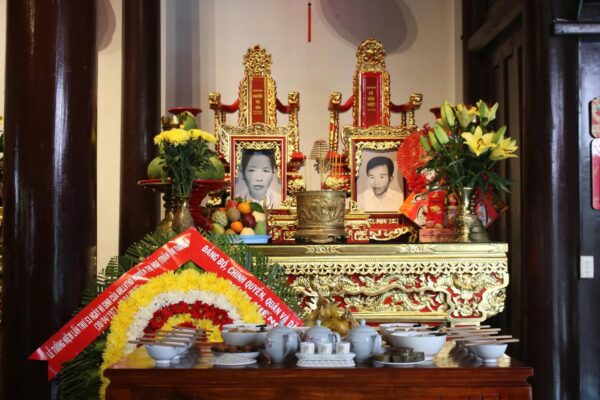


30 April on Con Dao: Remembering Nguyễn Thị Hoa (Trần Thị Thanh)
On 30 April 1973, Nguyễn Thị Hoa, also known as Trần Thị Thanh (1943–1973), died in Con Dao Prison at the age of 30. Her life links the revolutionary movement in the Đất Đỏ region with the history of women held as political prisoners on Con Dao. Among the most moving details of her story are the embroidered keepsakes she made for her family and the care she showed her fellow prisoners. The date also reminds visitors that 30 April 1973 and Vietnam’s reunification milestone on 30 April 1975 are two distinct historical events.
A young woman raised in Đất Đỏ
Nguyễn Thị Hoa, whose family name was Trần Thị Thanh, was born in 1943. Orphaned at a young age, she was raised by Lê Văn Tiễn and Trần Thị Nguyên in Phước Thạnh commune, in the historic Đất Đỏ area. Her adoptive family had limited resources, so she had to leave school after learning basic reading and writing to help with household work.
She grew up as the local resistance movement developed around Đất Đỏ and Long Đất. Deeply attached to the people of the area and conscious of the political turmoil of the period, she chose to join revolutionary activities while still young.
Women’s organising and underground resistance
In 1963, Nguyễn Thị Hoa left home to work with the women’s movement in Long Đất district. She joined the Southern Revolutionary Youth Union in January 1964. In June of that year, Bùi Văn Hải, Secretary of the Phước Thạnh Party cell, conducted her admission to the Party.
She helped mobilise local people and strengthen women’s organisations. In mid-1964, she volunteered for an operation against a commune chief known as Ba Cụt, whom the revolutionary forces accused of participating in repression of the local population.
According to the historical account, she disguised herself as a market-goer to approach the target. The grenade she threw did not explode. She was captured, beaten and taken to the Bà Rịa military district headquarters. During her transfer she tried to escape but was recaptured. Despite interrogation, she refused to reveal information about her comrades and the local revolutionary network.
Maintaining her resolve in prison
Nguyễn Thị Hoa was imprisoned at Tân Hiệp and later at Chí Hòa. In crowded, tightly controlled conditions, she participated in protests demanding more humane treatment and respect for the rights of political prisoners.
At Tân Hiệp, she responded to calls for collective resistance from political organisations inside the prison. She was transferred to Chí Hòa in 1969, where she joined other women in protesting repression and organising collective actions, including a memorial for President Hồ Chí Minh.
In 1970, the authorities of the Republic of Vietnam transferred her and other female political prisoners to Con Dao. Historical accounts place her in Room 15 of Camp 4. In the years that followed, she continued to support her fellow prisoners while enduring the severe conditions of confinement.
An embroidered pillowcase, handkerchiefs and a promise
While imprisoned on Con Dao, Nguyễn Thị Hoa embroidered pillowcases and handkerchiefs as keepsakes for her adoptive parents, younger brother and loved ones. She wanted these small handmade objects to reach her family if she never returned home.
Accounts preserved by fellow prisoners recall her asking a close companion, known as Ba Hòa, to pass on those keepsakes. Her message was simple: “If I cannot make it home, please give these to my family.” The wording is rendered here in English from the Vietnamese recollection.
When Ba Hòa fell ill with malaria, Nguyễn Thị Hoa visited her and expressed a wish to bear suffering in her friend’s place. Such moments reveal the affection and mutual support that sustained women who were confined together under extremely harsh conditions.
After the war ended in 1975, a former female political prisoner from Bến Tre reportedly brought the embroidered items back to Nguyễn Thị Hoa’s family. The pillowcase and handkerchiefs became reminders not only of imprisonment, but also of a promise honoured long after her death.
30 April 1973: her final day on Con Dao
In early 1973, following the signing of the Paris Peace Accords, disputes over the treatment and release of political prisoners continued. The Con Dao heritage centre’s records describe serious repression of prisoners around the period of her death.
Years of imprisonment, mistreatment and harsh living conditions had seriously damaged Nguyễn Thị Hoa’s health. She died in Con Dao Prison on 30 April 1973, aged 30. Her fellow prisoners were deeply distressed by the news and protested against the prison authorities, seeking permission to accompany her remains to the burial place.
Her life was tragically short, but the courage she showed and the tenderness she extended to family and comrades endured in the recollections of those who knew her.
Remembering Nguyễn Thị Hoa at Hàng Dương Cemetery
Her grave is located in Section C of Hàng Dương Cemetery on Con Dao, a memorial landscape associated with generations of Vietnamese patriots and political prisoners who died during their confinement.
Every 30 April is an occasion to remember Nguyễn Thị Hoa (Trần Thị Thanh). Flowers, incense and moments of reflection at the cemetery and Con Dao Memorial Temple express gratitude for her life and sacrifice. Official memorial programmes, when held, are announced separately for each year; the anniversary itself does not establish a fixed public ceremony.
A posthumous national honour
On 28 April 2000, Nguyễn Thị Hoa was posthumously awarded Vietnam’s title of Hero of the People’s Armed Forces in recognition of her contribution and sacrifice during the struggle for independence.
For people in Đất Đỏ and former political prisoners of Con Dao, she is remembered not only for her resolve during interrogation and imprisonment, but also for her kindness, loyalty to others and the gifts she prepared for family.
30 April: two dates that should not be confused
30 April 1973 marks Nguyễn Thị Hoa’s death in Con Dao Prison. 30 April 1975 marks the end of the war in southern Vietnam and is commemorated nationally as Reunification Day. The dates are two years apart and refer to different events, although both invite reflection on the human cost of war.
Remembering Nguyễn Thị Hoa also preserves the history of women who supported one another in Con Dao’s prisons through shared hardship, compassion and a determination not to abandon their beliefs.
Sources: Steadfast and Unyielding (Kiên trung bất khuất), Association of Former Political Prisoners of Bà Rịa–Vũng Tàu, 2009, pp. 135–137; History of the Struggle of Patriotic and Revolutionary Prisoners in Con Dao Prison (1862–1975), National Political Publishing House, 2010, pp. 460–463; Southern Women’s Museum; Con Dao National Heritage Conservation Centre.
Archival note: Published materials do not consistently identify her place of birth and differ on some details of her last hours. This article focuses on the dates and places supported by multiple records, particularly her death on 30 April 1973 and her burial in Section C of Hàng Dương Cemetery.