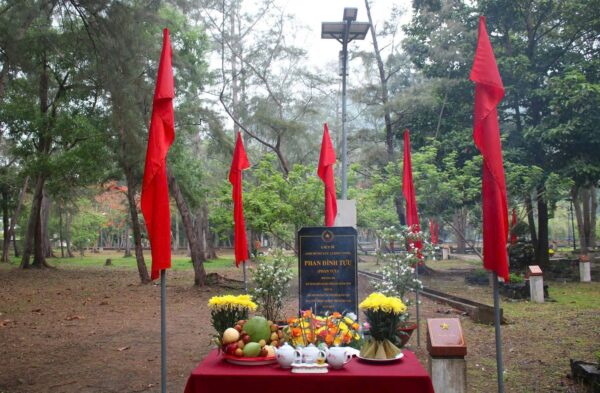


28 May on Con Dao: Phan Đình Tựu and the Songs of Prison Resistance
Every 28 May, Con Dao remembers Phan Đình Tựu (1936–1968), a posthumously honoured Hero of the People’s Armed Forces from Quảng Nam who died in the island’s prison system. Fellow prisoners remembered him for his resilience and for the revolutionary songs he sang to encourage others, even while suffering beatings and isolation. His voice became an enduring image of solidarity and resistance behind prison walls.
A young man from Bảo An, Quảng Nam
Phan Đình Tựu was born in 1936 in Bảo An village, Điện Quang commune, Điện Bàn district, Quảng Nam, according to the historical administrative names. His father was Phan Quang Đình and his mother was Huỳnh Thị Tao. In 1946, he moved with his mother to Giảng Hòa village, Đại Thắng commune, Đại Lộc district, also in Quảng Nam.
Growing up during years of war, he became involved in revolutionary activities while young. In 1961, he left home to join the resistance forces in the revolutionary base area. Using the name Phan Tề, he served in Unit V10 of the provincial main-force troops.
In 1963, he was severely wounded during a battle west of Quế Sơn and Hiệp Đức and was captured because he could no longer move. He was first held in Hội An Prison, then transferred to Thừa Phủ Prison to stand trial in Huế. He openly challenged the prosecution at his trial and received a life sentence.
On 26 June 1965, Phan Đình Tựu was deported to Con Dao Prison. From that point onward, he became part of one of the most determined periods of resistance by political prisoners on the island.
Imprisonment without surrender
Accounts recorded by former political prisoners describe how new arrivals on Con Dao were met with threats, beatings and displays of intimidation. Prison authorities tried to force political prisoners to salute the flag of the Republic of Vietnam as a means of making them renounce their political positions.
Phan Đình Tựu joined the movement resisting compulsory flag salutes. Throughout 1966 and 1967, he endured harsh punishment and solitary confinement. His health deteriorated and his legs were seriously affected, yet he continued studying, discussing politics, writing poetry and offering encouragement to his fellow prisoners.
From late 1967 into 1968, resistance among sentenced political prisoners gained strength. Many were moved to the notorious Tiger Cage isolation cells, where overcrowding, insufficient food and water, lime powder and physical violence made daily life almost unbearable. Prisoners nevertheless continued organised protests and hunger strikes against the conditions.
The voice that carried through the Tiger Cages
What distinguishes the memory of Phan Đình Tựu is not only his refusal to submit to interrogation but also his singing in the cells and Tiger Cages. He turned songs into a way to sustain hope and courage among people whose lives were controlled by the prison authorities.
According to the memoirs, when questioned about his refusal to salute the flag, he declared that he was a member of the National Liberation Front of South Vietnam and did not recognise the authority of the Saigon government. His steadfast response resulted in further beatings and isolation.
In pain and with failing strength, he continued to sing revolutionary songs and recite poetry, calling out to other prisoners and encouraging them not to give up. For men facing hunger, illness and threats every day, those songs provided both companionship and a declaration that their beliefs had not been broken.
Historical writings on the struggle to maintain political integrity in Con Dao Prison describe how guards repeatedly tried to silence him. Even after severe punishment, he would continue encouraging his fellow prisoners through songs and poems whenever he was able.
His death in late May 1968
The prison authorities intensified their repression of the anti-flag-salute protests in early May 1968. Phan Đình Tựu, whose singing and determination had helped strengthen the group’s morale, became one of the prisoners singled out for punishment.
Historical sources do not agree on every detail of his final hours or the precise date. They consistently record that he died during the repression of political prisoners on Con Dao in 1968. The Con Dao National Heritage Conservation Centre uses 28 May 1968 as his date of remembrance.
His death brought deep grief to fellow prisoners, but the memory of his songs endured as a symbol of resistance and solidarity. His story shows how cultural expression, even in the form of a single voice, could become an act of defiance under extreme conditions.
Paying respects at Hàng Dương Cemetery
Phan Đình Tựu’s grave is located in Section C of Hàng Dương Cemetery on Con Dao, where residents and visitors pay tribute to generations of Vietnamese people who died during imprisonment.
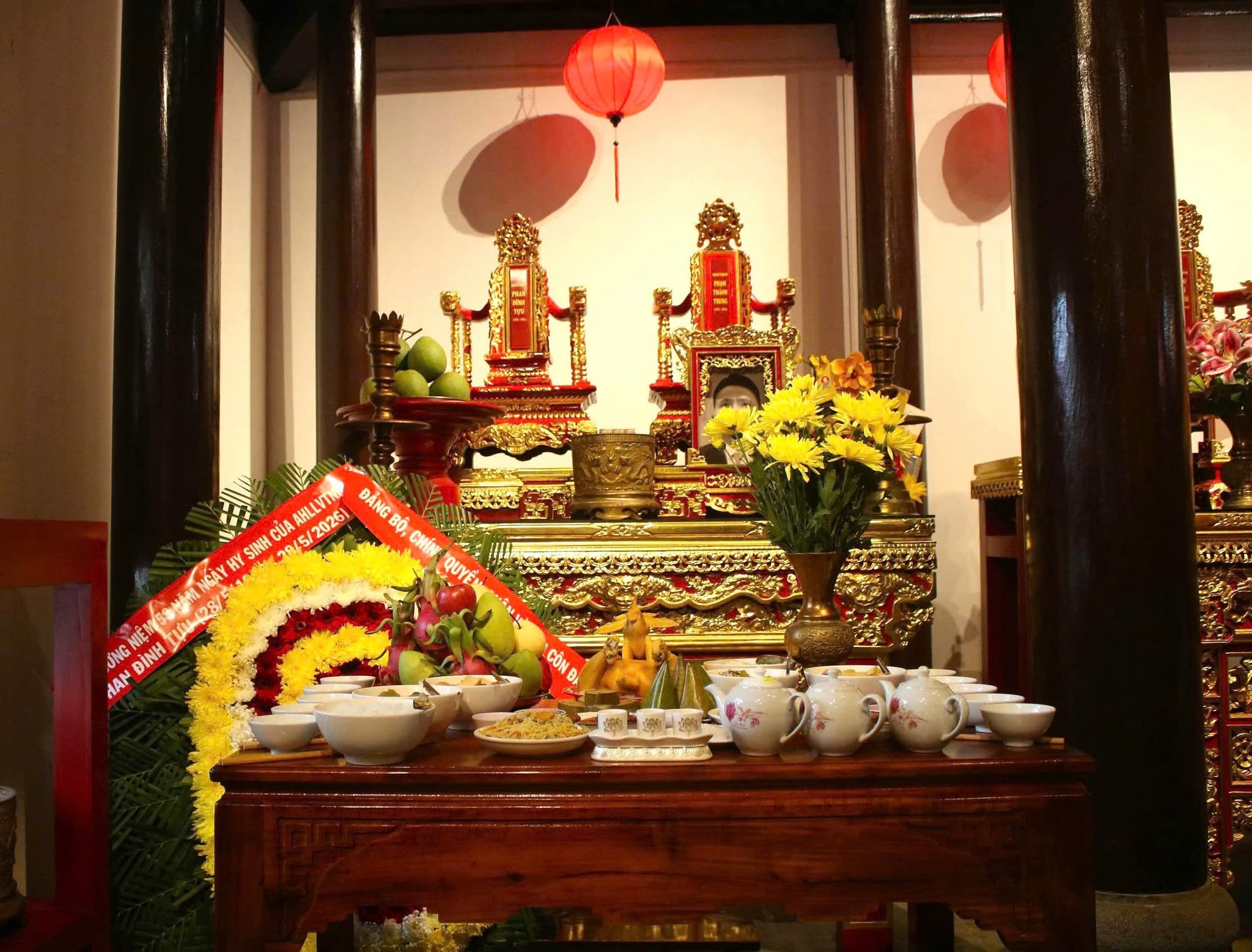
Every 28 May is an occasion to remember Phan Đình Tựu and reflect on the courage of a young man from Quảng Nam who gave his life during the struggle for independence. Memorial visits, incense offerings and learning about his life help keep that history accessible. Any official ceremony is announced separately for the relevant year.
Recognised as a Hero of the People’s Armed Forces
On 26 April 2018, Phan Đình Tựu was posthumously awarded the title Hero of the People’s Armed Forces. The honour recognised his determination and sacrifice during the struggle for national independence.
His journey began in the villages of Quảng Nam, passed through the battlefield and prison cells, and ended on Con Dao. But the memory of his voice reached beyond his individual life to represent the inner strength of people who continued to resist imprisonment and repression.
Remembering the songs behind the prison walls
Today, the prison sites of Con Dao retain cells, walls and Tiger Cages that visitors can see. Yet the physical structures tell only part of the story. Fellow prisoners also sustained one another through clandestine lessons, shared poems, songs and friendship.
To remember Phan Đình Tựu on 28 May is to remember that history of human solidarity. Captivity could constrain a person’s body, but it could not easily extinguish conviction or silence every song.
Sources: People of Quảng Nam and Con Dao (Người đất Quảng với Côn Đảo), Con Dao Former Political Prisoners’ Liaison Group in Đà Nẵng, Đà Nẵng Publishing House; Steadfast and Unyielding (Kiên trung bất khuất), Quảng Nam Association of Patriotic Former Prisoners, 2005, pp. 204–219; Red Seed (Hạt giống đỏ), pp. 12–13; Con Dao National Heritage Conservation Centre, report on the 58th anniversary of his death.
Archival note: The biographical account supplied for this article gives the night of 29 May 1968, while official commemorations on Con Dao in 2025 and 2026 used 28 May 1968. This article follows 28 May as the commemorative date while retaining a note of the discrepancy for future archival review.