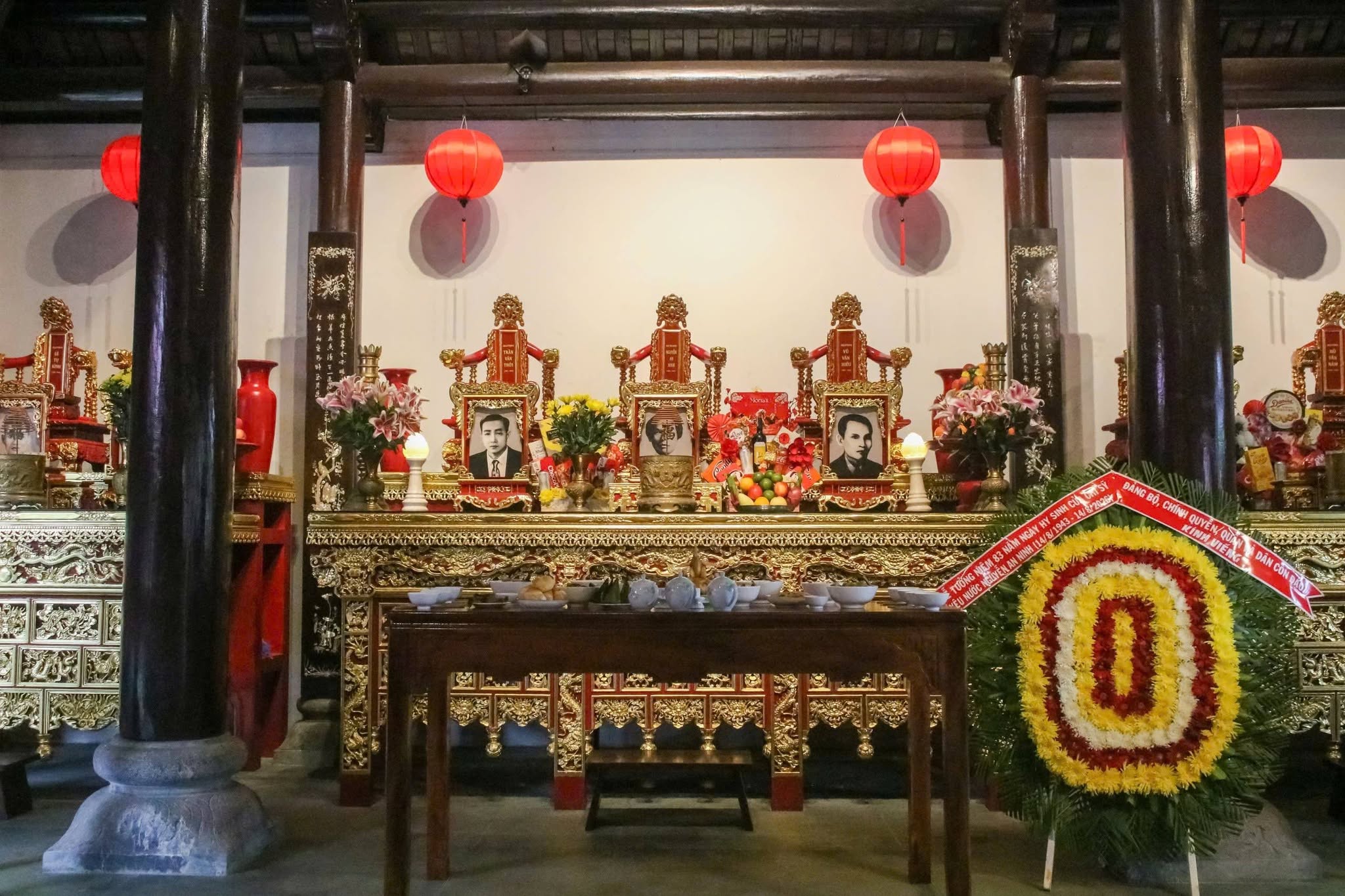


14 August on Con Dao: Remembering Patriot Nguyễn An Ninh (1900–1943)
Every 14 August, Con Dao remembers Nguyễn An Ninh (1900–1943), a Vietnamese patriot, journalist and thinker who devoted his life to the struggle for national freedom and died in Con Dao Prison. His grave at Hàng Dương Cemetery, and the remarkable efforts of fellow prisoners to protect it, remain moving chapters in the island’s history.
Among the quiet memorials of Hàng Dương Cemetery, Section A contains the resting place of a leading Vietnamese intellectual of the early twentieth century. Nguyễn An Ninh studied in France and could have pursued a promising personal career. Instead, he returned home and used journalism, public speaking and civic engagement to challenge colonial oppression.
After repeated arrests, he was exiled to Con Dao, where he died on 14 August 1943, aged just 43. More than eight decades later, his story continues to speak of learning, patriotism, human dignity and solidarity under imprisonment.
Nguyễn An Ninh: From a French-educated intellectual to a Vietnamese patriot
Born in 1900, Nguyễn An Ninh came from a family with a strong tradition of learning and patriotic thought, with ties to the historic Gia Định and Cần Giuộc areas. His father, Nguyễn An Khương, was a progressive Confucian scholar who knew a number of figures involved in Vietnam’s patriotic movements.
After studying in Saigon, Nguyễn An Ninh travelled to France in 1918 and studied law at the Sorbonne in Paris. There he met and worked alongside Vietnamese intellectuals and activists, including Nguyễn Ái Quốc, Phan Châu Trinh, Phan Văn Trường and Nguyễn Thế Truyền, figures often associated with a circle known as the “Five Dragons”.
Influenced by debates on civil liberties, democracy and national self-determination, he returned to Vietnam in 1922 and chose to engage the public directly, encouraging young people to think critically about their country’s future.
La Cloche Fêlée: A newspaper that challenged colonial rule
Nguyễn An Ninh became a prominent journalist and public speaker in southern Vietnam in the 1920s. Through lectures and ideas associated with The Aspirations of Annamese Youth (Cao vọng của thanh niên An Nam), he urged the younger generation to pursue knowledge, challenge complacency and accept responsibility for the country’s future.
On 10 December 1923, he founded the French-language newspaper La Cloche Fêlée, known in Vietnamese as Tiếng Chuông Rè, or “The Cracked Bell”. It criticised injustices under colonial rule, demanded greater liberty and democratic rights, and introduced new political and social ideas.
He was directly involved in writing, editing, printing and even selling the newspaper on the streets of Saigon. The sight of a young intellectual taking his message to the public became part of the city’s political memory. Lawyer Phan Văn Trường later played a role in the publication’s work.
Colonial authorities repeatedly placed obstacles in his path, yet his journalism and speeches helped stimulate political awareness among sections of the educated public and the younger generation.
Five arrests and his final years on Con Dao
Nguyễn An Ninh was arrested several times for his activities. On 5 October 1939, he was arrested for the fifth and final time by the French colonial authorities. He was subsequently sentenced to imprisonment and sent to Con Dao.
The island prison was marked by deprivation, illness and severe detention conditions. Accounts passed down by fellow prisoners describe how he continued to care for and encourage others even as his own health deteriorated.
Although he was not a member of the Communist Party, historical accounts reflect his sympathy and close bonds with those working for national liberation. A statement of commitment often attributed to him speaks of his willingness to serve without seeking personal recognition.
Nguyễn An Ninh died in Con Dao Prison on 14 August 1943, at the age of 43. His death was deeply mourned by fellow prisoners and the wider patriotic movement.
His grave and the solidarity of fellow prisoners
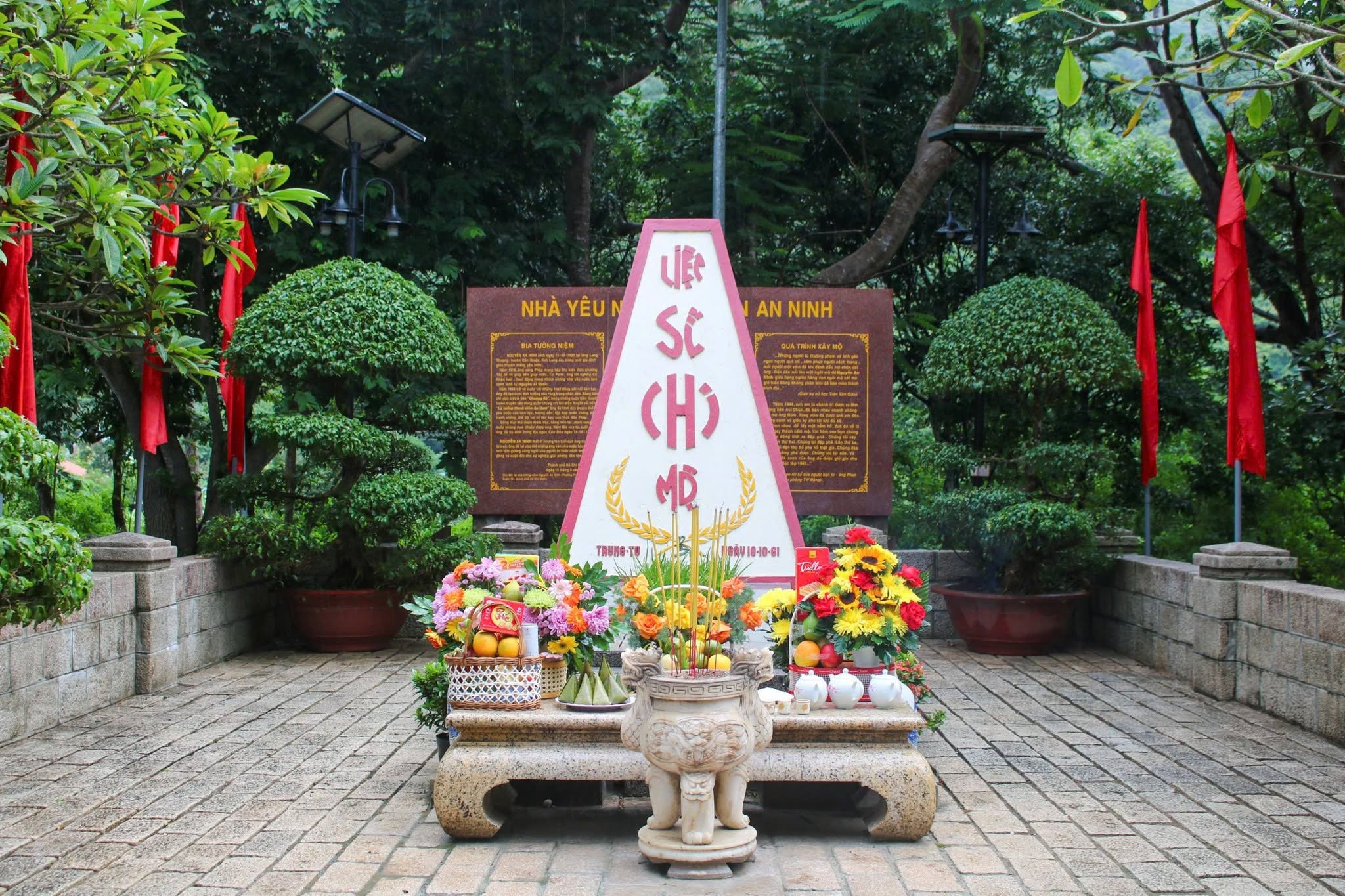
Burial conditions in Con Dao Prison were harsh. According to accounts of the prison’s history, fellow inmates tried to obtain a wooden coffin for Nguyễn An Ninh, but the request was refused. His remains were wrapped simply and buried at Hàng Dương Cemetery.
The other prisoners did not want the burial place of a respected patriot to disappear into the island’s sand. Quietly, they gathered materials and made efforts to preserve his grave.
Stones collected during forced labour
According to recollections attributed to former prisoner Phan Văn Voi, inmates working near Núi Chúa in 1944 planned to rebuild Nguyễn An Ninh’s grave. During forced-labour assignments, they searched for suitable stones, shaped them and secretly saved them for the memorial.
The structure was reportedly destroyed by prison guards, but the prisoners persisted. Each small stone came to represent respect, resilience and solidarity in a place where even remembrance was subject to control.
The account is about more than honouring one well-known individual. It illustrates a determination to protect the memory and dignity of those who had died in captivity.
The 1961 protest: Protecting the dignity of the dead
Another account concerning the grave dates to 1961, when the island was under the administration of the Republic of Vietnam. According to material recorded in The History of Con Dao Prison (1862–1975), prisoners were ordered to clear an access route for renovation works at Nguyễn An Ninh’s grave. The proposed work threatened to disturb other graves.
More than 50 political prisoners are recorded as having objected. They argued that honouring one person could not justify damaging the remains of others who had suffered and died in the same prison system. Every burial place deserved respect, whether or not its occupant was widely known.
Their resistance was met with violence, and prisoners were injured. Despite beatings and intimidation, they refused to excavate the graves of their fellow inmates. The episode survives in historical accounts and prisoners’ recollections of resistance on Con Dao.
This memory is sometimes evoked through the expression “the road of blood and bones” (Con đường xương máu). Here it is used as a powerful expression associated with the story, not as a verified official street name.
The central message is a belief in dignity and equality in remembrance: every person buried at Hàng Dương Cemetery deserves to have their resting place protected.
Nguyễn An Ninh’s grave at Hàng Dương Cemetery today
Today, Nguyễn An Ninh’s grave is located in Section A of Hàng Dương Cemetery. The memorial area contains markers and information about his life and work, and is an important stop for visitors exploring Vietnam’s patriotic movements and Con Dao’s prison history.
The grave recalls not only the sacrifice of an influential thinker, but also the solidarity of the prisoners who built and defended the memorial during different periods.
For background on the wider site, read Hàng Dương Cemetery and its history.
14 August: Remembering Nguyễn An Ninh on Con Dao
14 August on the Gregorian calendar is the anniversary of Nguyễn An Ninh’s death. In 1943, that date corresponded to the 14th day of the seventh lunar month, but the two dates do not fall on the same day every year.
Some memorial services in the past have followed the lunar calendar. It is therefore important to distinguish the historical date of his death from the actual schedule of a ceremony in any given year. Visitors should rely on announcements from the relevant organisers for formal commemoration arrangements.
Exploring Nguyễn An Ninh’s legacy during a visit
Visitors can combine a stop at his grave in Section A of Hàng Dương Cemetery with the Con Dao Prison historical sites, former detention areas and the Con Dao Museum. Together these places provide context for his life, Vietnam’s patriotic press and the experiences of generations of political prisoners.
Please dress respectfully at the cemetery, keep noise to a minimum, follow site guidance and avoid offerings that could harm the environment.
If arriving by sea, check current ferry schedules and indicative ticket prices before making travel plans.
Nguyễn An Ninh’s intellectual legacy
Nguyễn An Ninh illustrates the role of intellectuals during a period of profound change in early twentieth-century Vietnam. He used learning, journalism and public speaking to promote independent thought, social awareness and a sense of responsibility among young people.
His enduring legacy lies not only in his articles and lectures, but also in the consistency between his convictions and his actions. From Paris to Saigon and finally Con Dao, he chose active involvement over personal comfort.
A life remembered on Con Dao every 14 August
Beneath the trees of Hàng Dương Cemetery, Nguyễn An Ninh’s grave remains a place for residents and visitors to learn, remember and pay respect. Stones carried by fellow inmates, stories of protecting graves and today’s memorial markers form a continuous thread of remembrance.
On Con Dao, 14 August is more than an anniversary of one patriot’s death. It is a reminder of the strength of knowledge, national commitment, solidarity and the duty to uphold human dignity.
Explore more dates, personalities and local heritage stories at Con Dao Events on vetaucondao.vn.
Vietnamese version: Ngày 14/8 tại Côn Đảo: Tưởng nhớ nhà yêu nước Nguyễn An Ninh.